Heirloom Kitchen & Tea Pieces
The Brass Edit
Handcrafted pieces in solid brass for the kitchen that brews, stores, strains, and serves. Made in Moradabad, India's Brass City, by artisans whose families have shaped this metal for generations.
Shop the CollectionEvery kitchen has a metal. This one is yours.
The Collection
Brass for Every Ritual
From your morning chai to your evening cook, each piece is made to be used, seen, and kept for a long time. Explore by the way they live in your kitchen.
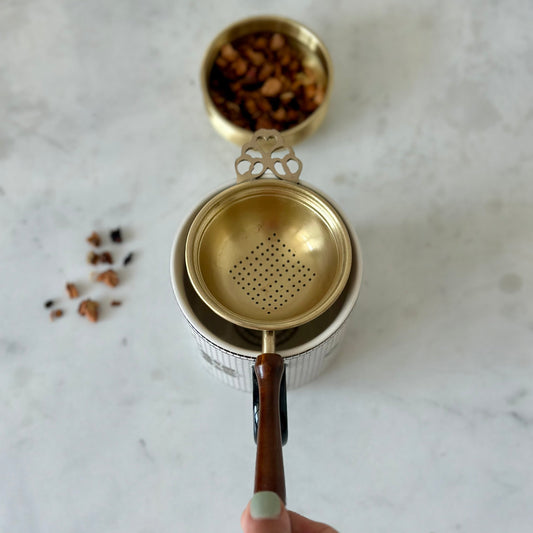
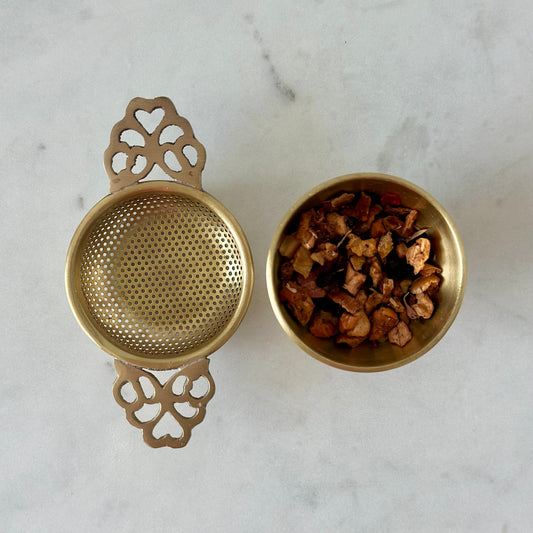
Brass Tea Strainer
£19.00
View Product
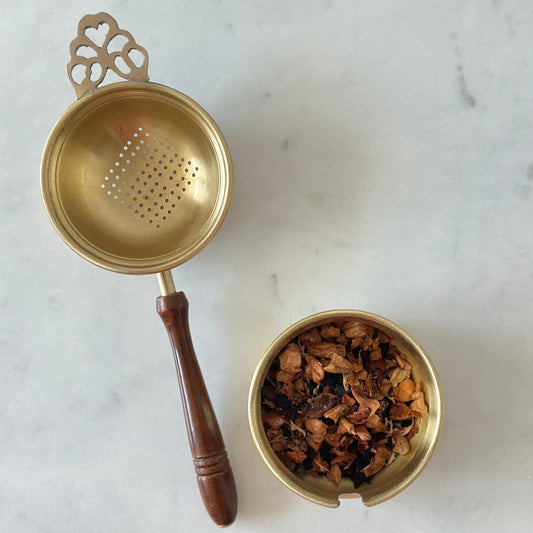
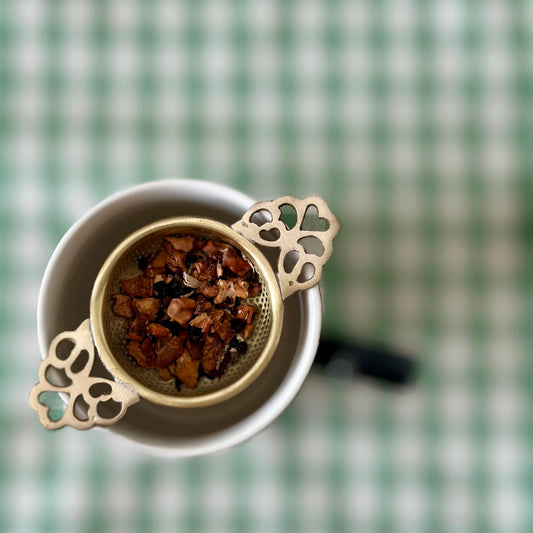
Brass Tea Strainer
£19.00
View Product
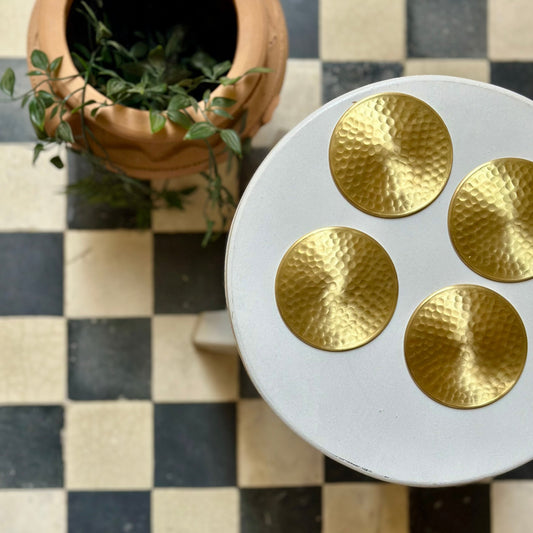
Brass Coasters
£19.90
View Product
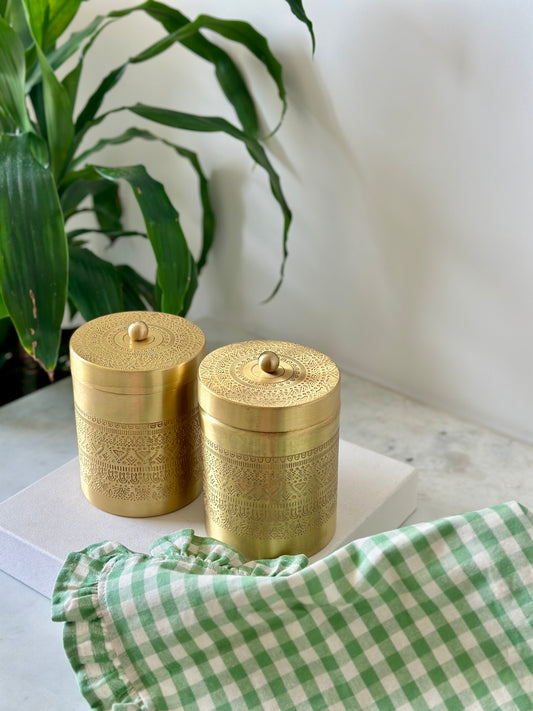
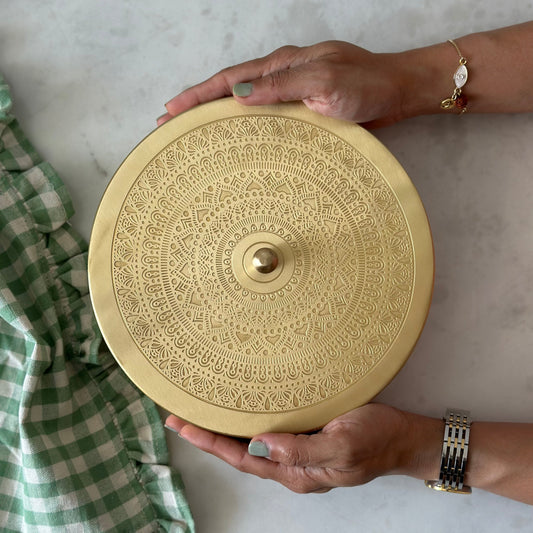
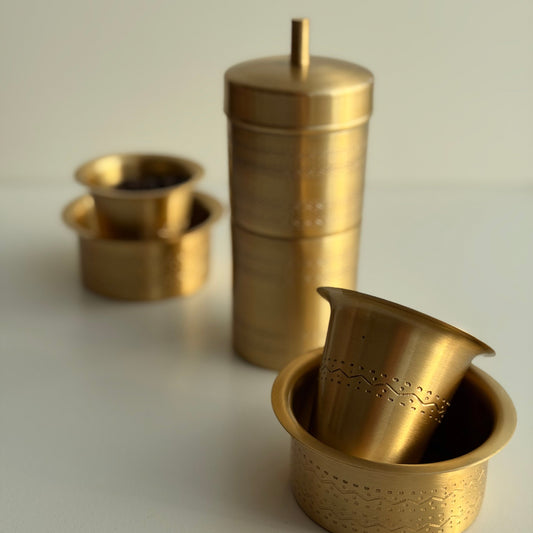
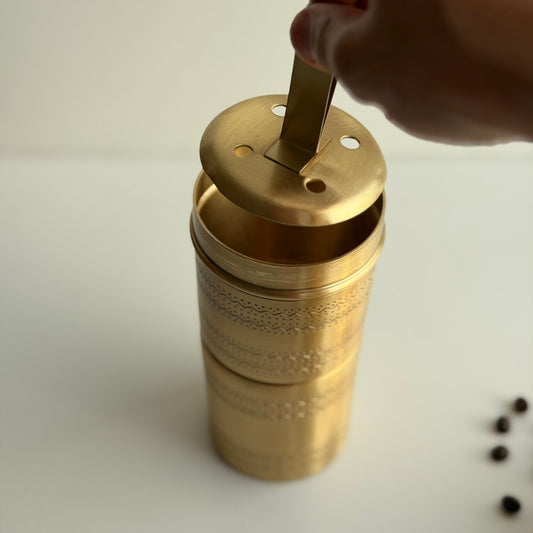
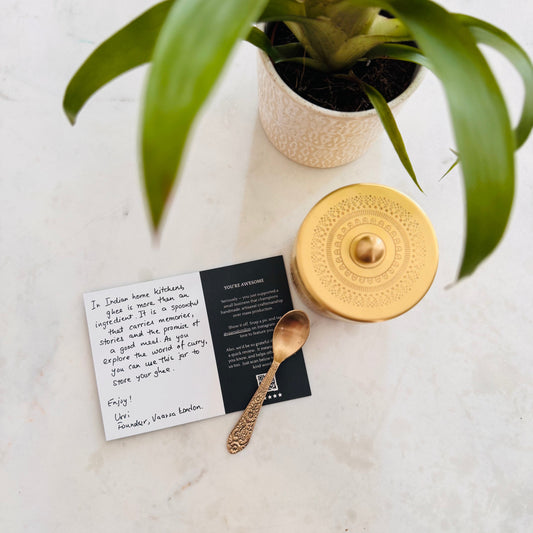
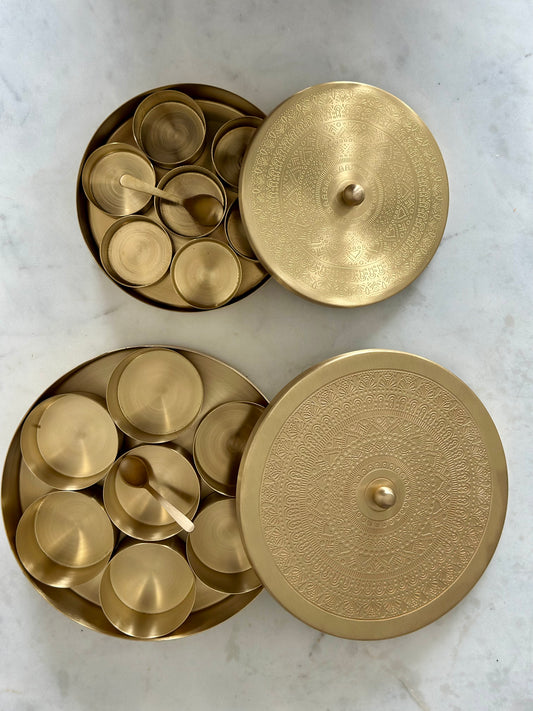
Brass Jars
From £62.00
View ProductThe Metal
Peetal. The original kitchen brass.
Brass has been in South Asian kitchens for centuries. Known across the subcontinent as peetal, it was the metal of choice for storing spices, brewing chai, and serving food long before stainless steel existed. It is naturally antimicrobial, conducts heat beautifully, and keeps food and spices fresher for longer than plastic or glass ever will.
In Ayurveda, brass is believed to balance the doshas and enhance the nutritional quality of what it holds. In practice, it simply makes your kitchen work better and look the way it should.
In 2025, brass became the dominant metallic accent in UK homes, replacing the cool chrome and stainless steel of the past decade. Interior designers are specifying it for cabinet hardware, tap fixtures, lighting, and open shelving. The appeal is warmth: brass softens modern kitchens without losing their edge.
For the Vaarsa customer, this is not a trend to follow. It is a tradition coming full circle. These pieces sit as comfortably in a contemporary London kitchen as they do in the home you grew up in. That is the point.
The Source
Moradabad, Uttar Pradesh
We visited the workshop where your pieces are made. This is what we found.
From our visit to the brass workshops in Moradabad.
Founded in 1600 under Mughal patronage, Moradabad has shaped brass for over four centuries. The locals call it Peetal Nagri. Brass City. Over 25,000 workshops line its narrow lanes, producing roughly 80% of all brassware in India. Most are run by the same families who started them generations ago.
Nothing here is factory made. Brass is heated to a red glow, poured into sand cast moulds, hammered by hand, then engraved, polished, and finished. Each step is done by a different specialist, each trained by the generation before.
The workshop behind Vaarsa's brass is smaller than most London kitchens. A single bare bulb. Clay moulds stacked on the floor. The artisan shapes a jar lid with the kind of precision that comes from decades of repetition, not machinery.
Every piece in this collection passed through those hands before it reached yours. The hammer marks are not imperfections. They are signatures.
Care
Looking After Brass
Simple care. Long life.
Regular Cleaning
Wash with warm water and mild soap. Dry immediately with a soft cloth. Brass prefers not to sit in water.
The Patina
Over time, brass deepens in colour. That is natural oxidation, and many people prefer the aged look. To restore the original glow, use a paste of lemon and salt, a traditional tamarind rub, or Pitambri powder (a small sample is included with your Vaarsa order; also available on Amazon when you need more).
For Food Storage
Brass jars are ideal for dry goods: tea, sugar, whole spices, biscuits. Avoid storing acidic or wet foods in unlined brass. The airtight seal keeps contents fresher for longer than plastic or glass.
What to Avoid
Dishwashers. Harsh chemical cleaners. Abrasive scrubbers. Gentle and traditional is the way. These pieces are built for generations, not just years.